
12 October 2026
The Department of Family Medicine and Primary Care, School of Clinical Medicine of the LKS Faculty of Medicine of the University of Hong Kong (HKUMed), commissioned by the Health Bureau, the Government of the Hong Kong Special Administrative Region of the People's Republic of China (HKSAR), is conducting a comprehensive evaluation of the Chronic Disease Co-Care (CDCC) Pilot Scheme, examining its quality of care, acceptability to participants, effectiveness and cost-effectiveness. Evaluation findings as of February 2026 indicate that the Scheme has shown strong participant engagement and high levels of satisfaction. Significant improvements have also been observed in cardiovascular and metabolic health indicators, highlighting the Scheme's effectiveness in improving participants' health and its potential to reduce the burden of chronic disease on the community.
Enrolment surpasses 200,000 ten months ahead of target
Since the launch of the CDCC Pilot Scheme in November 2023, it has received a highly positive response, with enrolment rising steadily. As of January 2026, enrolment has surpassed 200,000, achieving the Government's original target 10 months ahead of schedule. The Scheme was regularised in March this year and renamed ‘Chronic Disease Co-Care Scheme’. Among those who completed screening, approximately 40% were diagnosed with diabetes mellitus, hypertension or pre-diabetes, demonstrating that the Scheme effectively supports early identification of undiagnosed chronic conditions and ensures timely access to appropriate treatment and management.
The CDCC Scheme provides eligible Hong Kong residents with subsidised comprehensive cardiovascular disease risk screening through family doctors, and offers holistic care together with multidisciplinary management services covering both pharmacological and non-pharmacological treatment management for participants found through screening to have diabetes mellitus, hypertension or pre-diabetes. Through a multidisciplinary public-private partnership model, the Scheme implements the ‘early detection and timely intervention’ strategy advocated in the Primary Healthcare Blueprint.
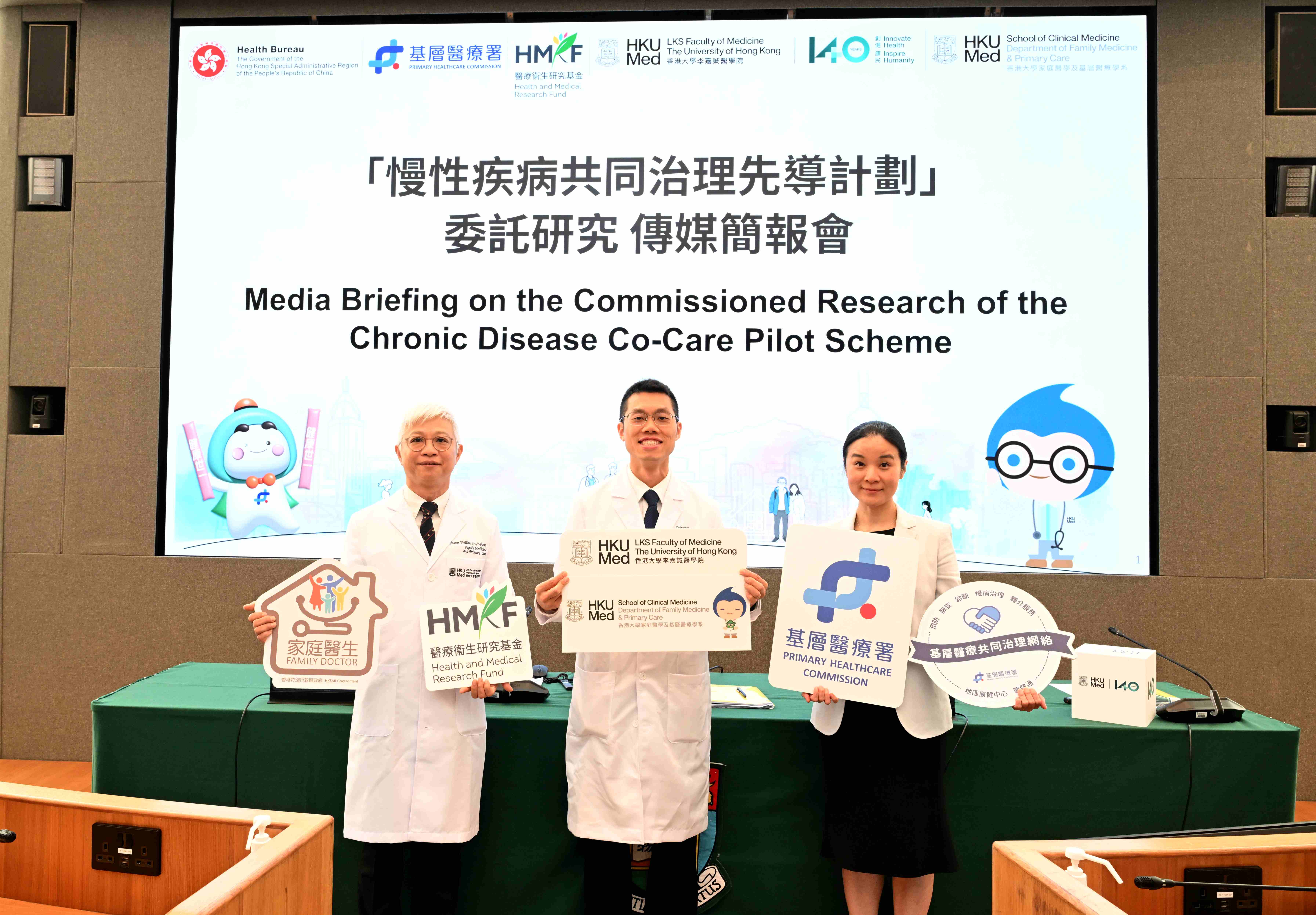
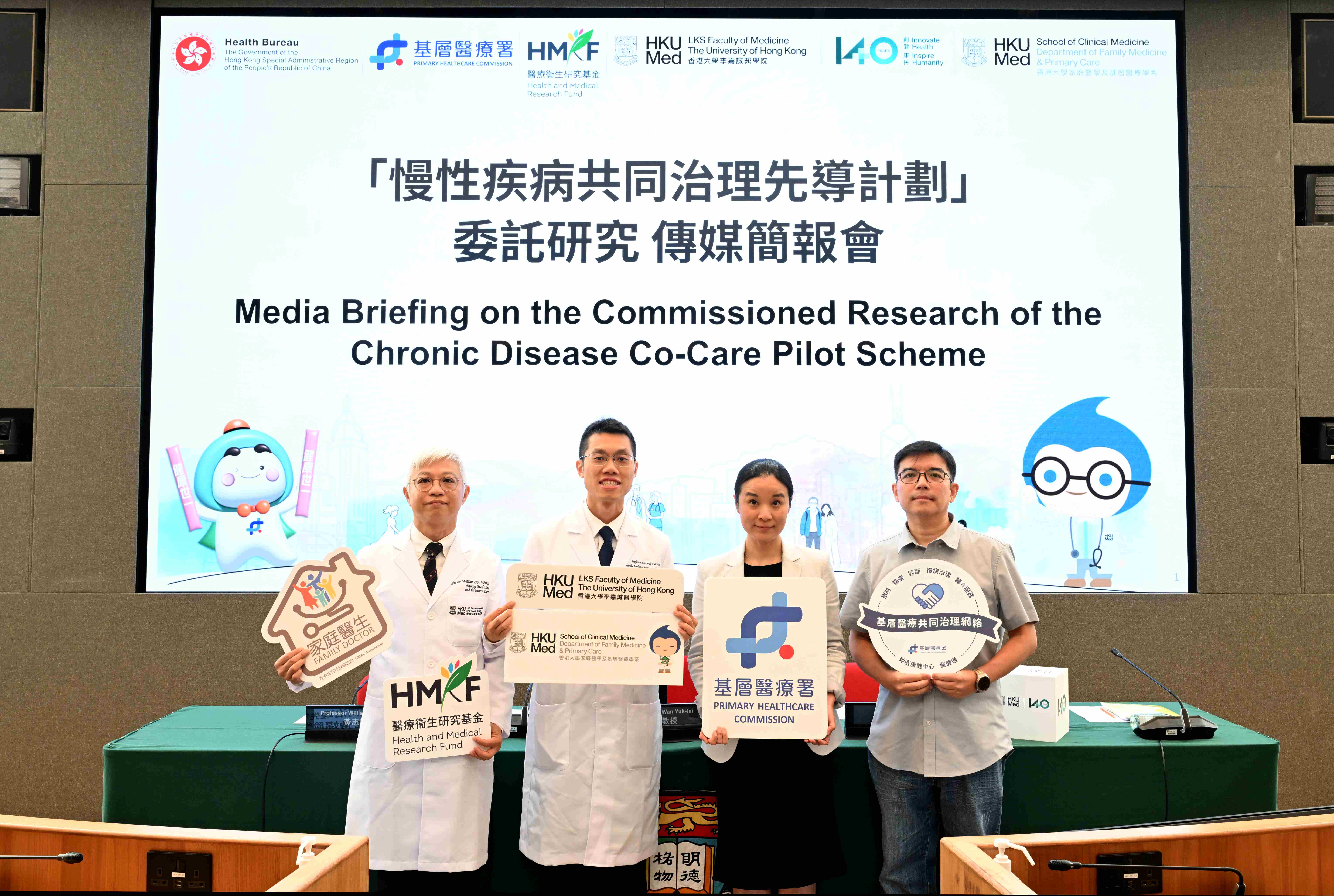
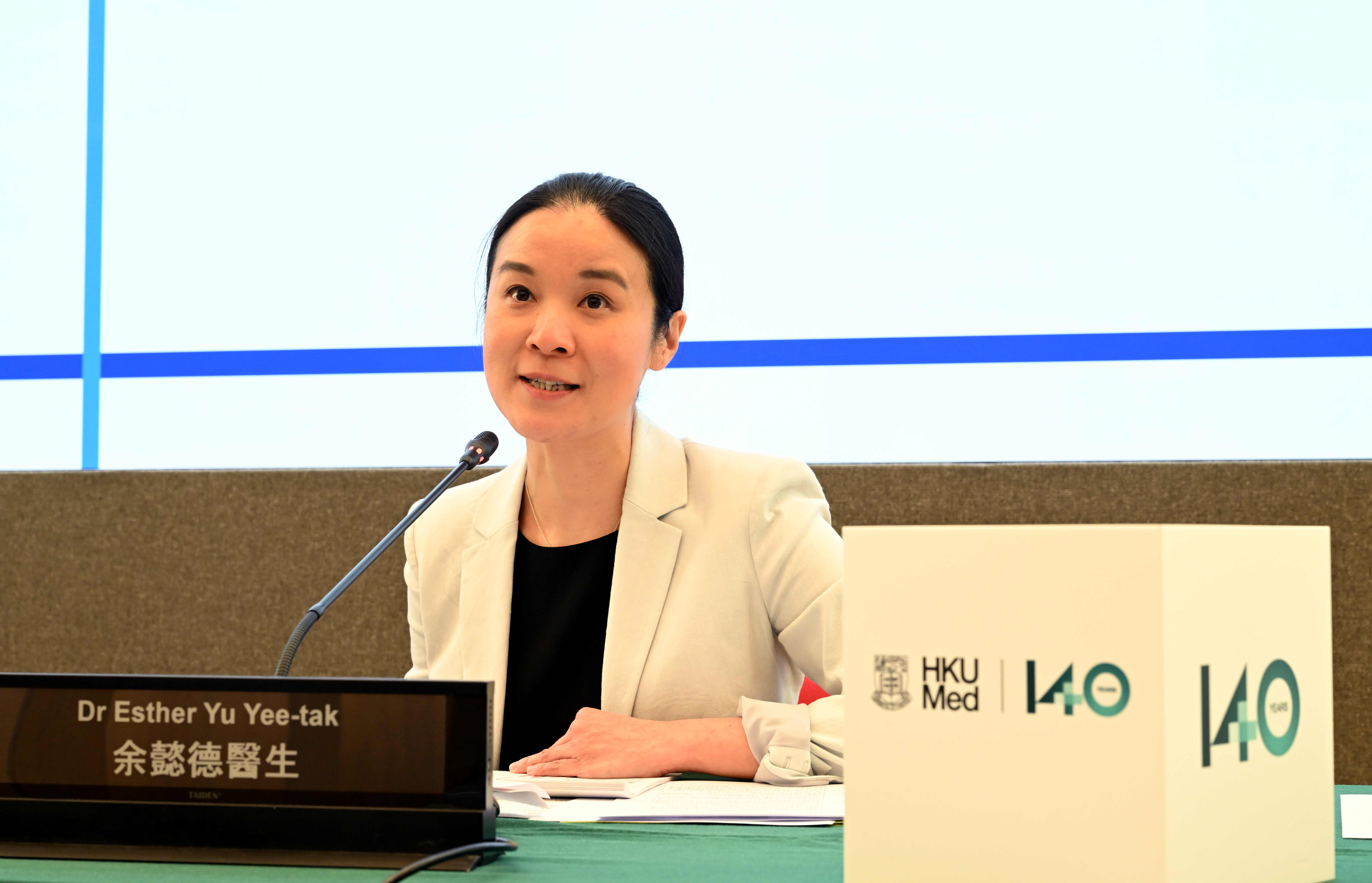
Dr Esther Yu Yee-tak, Consultant of the Primary Healthcare Commission, Health Bureau, said, ‘The first-year evaluation findings are encouraging. By identifying chronic diseases at an early stage and providing timely and coordinated holistic health care, the Scheme helps the public proactively manage their health, reducing the likelihood of complications. The significant clinical outcomes shown in the evaluation underscore the value of a prevention-oriented and community-based primary healthcare model. Such a model not only facilitates early intervention and strengthens disease control, improving the long-term health outcomes of the overall population, but also helps to reduce the long-term burden of chronic diseases.’
Significant improvements in clinical outcomes
To evaluate the clinical outcomes of the Scheme, the research team analysed data from 26,990 participants who completed screening by 30 June 2024. Among them, 5,950 participants newly diagnosed through screening with diabetes mellitus, hypertension or pre-diabetes received multidisciplinary management and completed one year of continuous follow-up.
The result showed significant improvements in the major risk factors among participants with diabetes mellitus. Their mean glycated haemoglobin (HbA1c) level decreased from 7.76% to 6.70% after one year; systolic blood pressure (SBP) and low-density lipoprotein cholesterol (LDL-C) also decreased by 7.01 mmHg and 0.76 mmol/L respectively after one year. Among participants with hypertension, mean SBP decreased by 14.87 mmHg and LDL-C by 0.56 mmol/L after one year. Participants with pre-diabetes likewise recorded favourable outcomes, with mean reductions of 0.52 kg/m2 in body mass index (BMI) and 0.41 mmol/L in LDL-C after one year.
To assess the attainment of recommended treatment targets, the research team selected 1,597 eligible Scheme participants from the same one-year follow-up cohort and conducted a matched analysis against 412 individuals who, during the same period, neither participated in the CDCC Scheme nor received management for the relevant diagnoses in public or private healthcare settings. The analysis found that:
- The odds of participants with diabetes mellitus achieving the HbA1c target of <7% were 2.8 times higher than those of the control group.
- The odds of participants with hypertension achieving the SBP target of <140 mmHg were 0.5 times higher than those of the control group, while their odds of achieving the LDL-C target based on cardiovascular risk levels were 1.1 times higher.
- The odds of participants with pre-diabetes achieving a BMI target of <25 kg/m² were 2.9 times higher than those of the control group.
The findings indicate that participation in the Scheme can significantly improve a range of key cardiovascular and metabolic clinical indicators among newly diagnosed patients. After one year of follow-up, the likelihood of patients achieving the recommended treatment targets was also significantly increased.
High participant satisfaction and self-enablement under the CDCC Scheme
To evaluate participants' satisfaction and self-enablement, the research team recruited 614 Scheme participants recruited through all District Health Centres (DHCs) and DHC Expresses across Hong Kong, and conducted two rounds of questionnaire surveys at different stages of the Scheme. The results showed that more than 96% of respondents considered the services provided by DHCs, including dedicated nurse clinics and health education programmes, to be necessary and helpful, effectively complementing the consultation services provided by Scheme family doctors and playing an indispensable supporting role.
‘The high levels of satisfaction and enablement among Scheme participants reflect the CDCC Scheme's person-centred and comprehensive management of cardiovascular disease. Over 90% of respondents reported an enhanced ability to understand, manage, and cope with their own health conditions. Participants gave the Scheme high ratings, with an overall impression score of 80 out of 100, while consultation services with their paired Scheme family doctors received an average score of 78 out of 100,’ said Professor Eric Wan Yuk-fai, Associate Professor from the Department of Family Medicine and Primary Care under the School of Clinical Medicine, and the Department of Pharmacology and Pharmacy, HKUMed, and principal investigator of the study.
Building on success to strengthen primary healthcare in Hong Kong
Professor William Wong Chi-wai, Danny D B Ho Professor in Family Medicine, Clinical Professor and Chairperson of the Department of Family Medicine and Primary Care, School of Clinical Medicine, HKUMed, said, ‘The findings highlight the potential of the CDCC Pilot Scheme in supporting preventive healthcare and chronic disease management through primary care. Even individuals who are completely asymptomatic can, through subsidised screening, identify hidden health risks and health hazards early, and manage their health properly.’
About the research team
This study was led by Professor Eric Wan Yuk-fai, Associate Professor, Department of Family Medicine and Primary Care under the School of Clinical Medicine, and the Department of Pharmacology and Pharmacy, HKUMed. Other research team members include Professor Cindy Lam Lo-kuen, Professor William Wong Chi-wai, Professor Emily Tse Tsui-yee, Professor Linda Chan and Professor Amy Ng Pui-pui from Department of Family Medicine and Primary Care; Professor David Bishai from School of Public Health, HKUMed; Professor Edmond Choi Pui-hang, from the School of Nursing, HKUMed; Professor Martin Roland, from the Department of Public Health and Primary Care, The University of Cambridge; Professor Michael Kidd, from the Nuffield Department of Primary Care Health Sciences, University of Oxford; and Dr Esther Yu Yee-tak from the Primary Healthcare Commission, Health Bureau.
Acknowledgements
This research was funded by the Health and Medical Research Fund of the Health Bureau. The research team acknowledges the support of the Health Bureau (including the Primary Healthcare Commission, the Strategic Purchasing Office, and the Research and Data Analytics Office), the Hospital Authority, and the DHCs and DHC Expresses. The research team also expresses its gratitude to the academic co-investigators and collaborators, community partners (including District Council members and Care Teams), alongside all dedicated service providers and participants in the CDCC Pilot Scheme.
Media enquiries
Please contact LKS Faculty of Medicine of The University of Hong Kong by email (medmedia@hku.hk).


Follow HKUMed