
09 September 2026
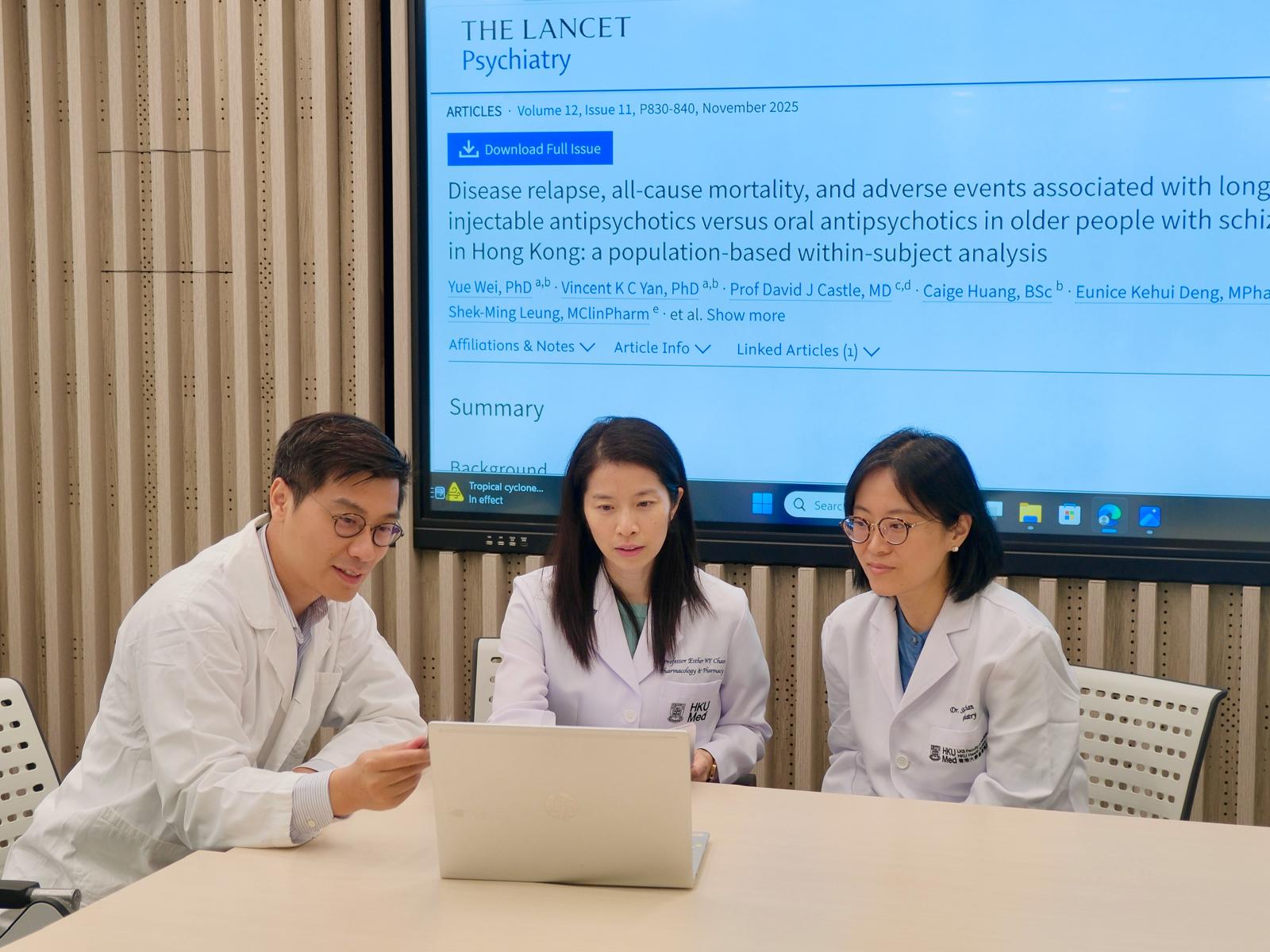
A research team from the Department of Pharmacology and Pharmacy, LKS Faculty of Medicine, the University of Hong Kong (HKUMed), has found that long-acting injectable (LAI) antipsychotics provide better treatment outcomes than oral antipsychotic medications for patients aged 65 and above with schizophrenia. Among this group, LAI antipsychotics were found to reduce relapse-related hospital admissions by 29% and all-cause mortality by 77% compared to oral antipsychotics. In people with bipolar disorder, relapse-related hospital admissions were reduced by 33%. Both studies highlight the potential value of LAI antipsychotics, particularly second-generation formulations, in improving long term stability, especially in patients with poor medication adherence. Benefits were optimised when LAI antipsychotics were used in the earlier stage of the illness. The findings were published in The Lancet Psychiatry [link to the publication] and The American Journal of Psychiatry respectively [link to the publication].
Challenges in medication non-adherence in severe mental illness
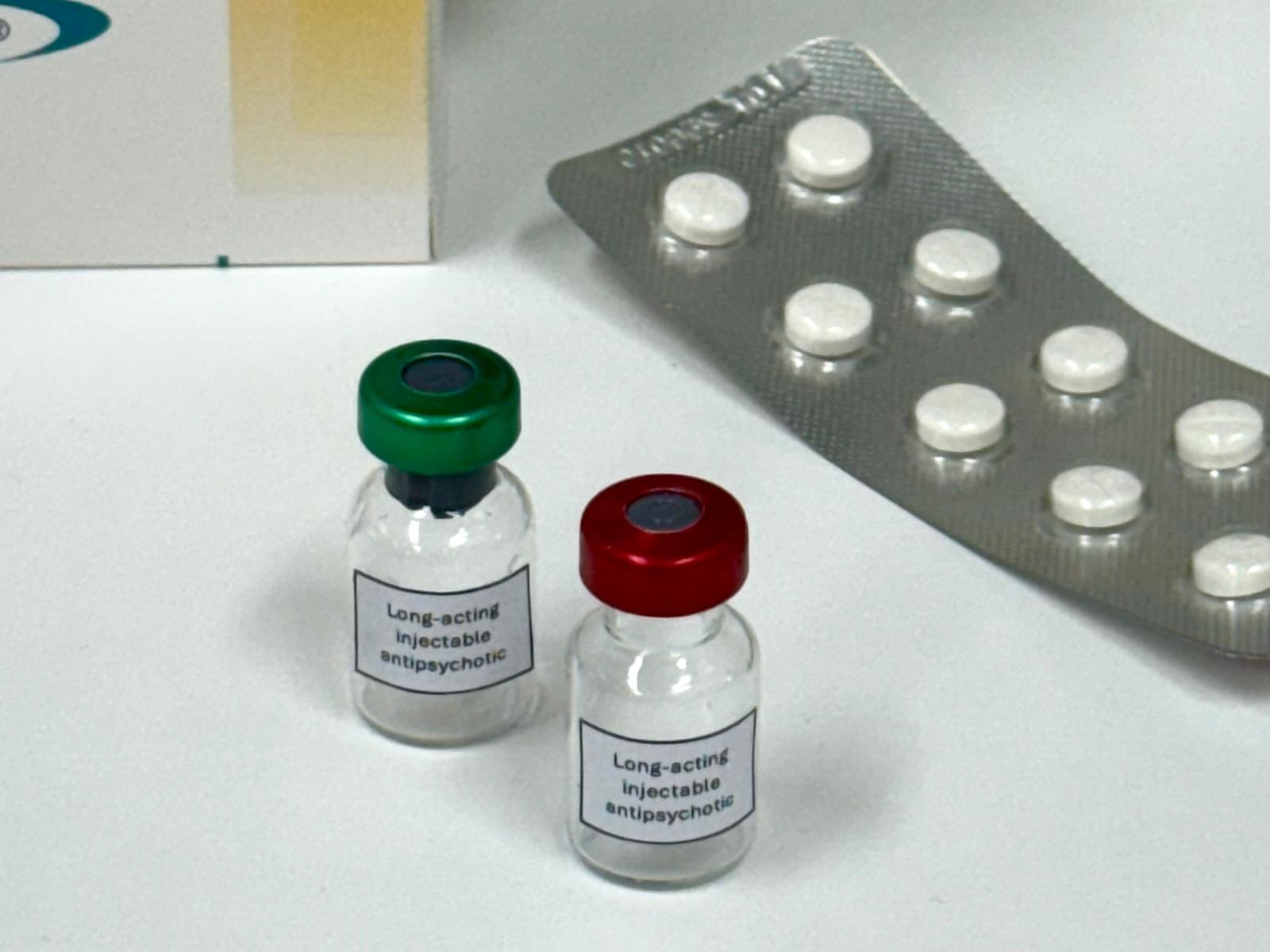
Medication non-adherence is a well-recognised challenge among people with severe mental illness (SMI), including schizophrenia and bipolar disorder. Oral antipsychotics typically require daily dosing, which may be challenging for patients to adhere to, leading to an increased risk of relapse. LAI antipsychotics, administered at intervals ranging from weeks to months, were developed to support sustained adherence to treatment.
‘People living with SMI often face challenges that can affect medication adherence and continuity of treatment,’ said Professor Esther Chan Wai-yin, Professor in the Department of Pharmacology and Pharmacy, HKUMed. ‘These challenges include cognitive decline, multiple chronic conditions, and complex medication regimens. Our research based on territory-wide real-world data provides evidence that LAI antipsychotics help address these barriers by supporting more stable, continuous treatment. However, careful monitoring remains important, particularly for extrapyramidal symptoms (antipsychotic-induced movement disorders) that may be more likely to occur with first-generation LAI antipsychotics.’
Benefits of LAI antipsychotics: fewer relapses and lower mortality
Using the Hospital Authority's territory-wide electronic health record database, the research team identified 4,696 elderly patients with schizophrenia and 2,086 patients with bipolar disorder to compare the effects of LAI antipsychotics and oral antipsychotics on these patients.
Among elderly people with schizophrenia, LAI antipsychotics were associated with a 29% reduction in schizophrenia-related hospital admissions and a 77% reduction in all-cause mortality compared with oral antipsychotics. There were no significant differences in several serious adverse effects, including cardiovascular hospital admissions, acute liver injury, and acute kidney injury. Although a higher risk of extrapyramidal symptoms was observed, this was confined to first-generation LAI antipsychotics.
Similarly, among individuals with bipolar disorder, LAI antipsychotics were associated with a 33% reduction in psychiatric hospitalisations, without an increased risk of non-psychiatric or cardiovascular hospitalisations. LAI antipsychotics use was associated with nearly three times the rate of extrapyramidal symptoms during the first 90 days of treatment than oral antipsychotics. However, this difference was no longer observed after the first 90 days.
The studies also suggested that earlier initiation of LAI antipsychotics may be associated with better outcomes. Compared to late initiators, individuals who commenced LAI antipsychotics within two years of their first schizophrenia or bipolar disorder diagnosis experienced fewer hospitalisations and clinical complications. Overall, the findings support broader consideration of LAI antipsychotics for long-term management in SMI, alongside appropriate monitoring and an individualised risk–benefit assessment.
Expanding research to other vulnerable populations
The research team is examining how LAI antipsychotics can be used safely and effectively in other vulnerable groups who may be struggling with medication adherence or facing higher risks of relapse and medication-related problems. ‘Our ongoing studies include examining LAI antipsychotics use in pregnant women and individuals with depression, substance use disorders, and intellectual disability, where treatment complexity, comorbidity, and service needs can be more complex,’ said Professor Chan.
The team previously reported territory-wide evidence in the broader schizophrenia population in Hong Kong. In a related self-controlled series study published in JAMA Network Open (2022) [link to the publication], LAI antipsychotics were associated with a 47% reduction in hospitalisations for schizophrenia, a 44% decrease in suicide attempts, and 37% fewer all-cause hospitalisations, without increasing the risk of somatic or cardiovascular-related hospitalisations or extrapyramidal symptoms. Collectively, this research series has strengthened real-world evidence to support patient-centred, safe and effective use of LAI antipsychotics across severe mental illnesses.
Professor Chan commented, ‘Considering the potential benefits of the use of LAI antipsychotics, we need to further explore the barriers to uptake, and be mindful of the small risk of extrapyramidal side effects.’
Multi-faceted interventions to optimise LAI antipsychotics use
Although these findings may facilitate a better understanding of LAI antipsychotics, several barriers to their use persist. These include misconceptions about the need for LAI antipsychotics in treatment, the societal implications of their use, patients' limited access to accurate information, insufficient involvement in treatment decisions, and delays in treatment initiation.
To address these challenges, the team is committed to implementing multifaceted interventions to improve understanding and support the appropriate use of LAI antipsychotics, in collaboration with hospitals across all six Hospital Authority clusters, including Pamela Youde Nethersole Eastern Hospital, Queen Mary Hospital, Kowloon Hospital, United Christian Hospital, Kwai Chung Hospital, Tai Po Hospital, and Castle Peak Hospital, as well as leading international institutions including Harvard University, Massachusetts General Hospital, and the University of Tasmania.
About the research team
The study was led by Professor Esther Chan Wai-yin, Director of the Centre for Safe Medication Practice and Research, Department of Pharmacology and Pharmacy, and Co-Director of the Centre for Health AI Research and Translation, HKUMed. Other research team members include Eunice Deng Kehui, Huang Caige, Professor Francisco Lai Tsz-tsun, Lee Kyung Jin, Leung Shek-ming, Dr Vanessa Ng Wai- sei, Dr Wei Yue, Dr Vincent Yan Ka-chun, and Dr Edmund Yiu Hei-hang, from the same department, and Professor Sherry Chan Kit-wa and Professor Simon Lui Sai-yu from the Department of Psychiatry, School of Clinical Medicine, HKUMed.The project also involves multidisciplinary collaboration with leading scholars from institutions in Hong Kong, the Chinese Mainland, Australia, the United Kingdom and the United States.
Acknowledgement
The study was conducted using territory-wide electronic health records from the Hospital Authority.
Media enquiries
Please contact LKS Faculty of Medicine of The University of Hong Kong by email (medmedia@hku.hk).

Follow HKUMed