
28 May 2026
A research team from the School of Biomedical Sciences at the LKS Faculty of Medicine, the University of Hong Kong (HKUMed), has achieved a significant breakthrough in biotechnology that could revolutionise treatment strategies for neurodegenerative diseases. The team has developed a novel tool called RNA Segment Editing (RSE), which functions like a ‘cut-and-patch’ tool for RNA. This innovative approach allows scientists to precisely remove or replace faulty segments of genetic messages within living cells without permanently changing a person's DNA. The findings pave the way for a new generation of reversible, targeted therapies for neurodegenerative conditions such as Huntington's disease. The study was published in the prestigious journal Nature Communications [link to the publication].
Targeted RNA repair: correcting errors without harming cells
While DNA is often called the ‘blueprint’ of life, RNA is the messenger that carries instructions for building essential proteins within cells. Professor Kwon Sung Chul, Assistant Professor in the School of Biomedical Sciences, HKUMed, explained, ‘In many genetic conditions like Huntington's disease and certain cancers, RNA messages can contain errors or toxic segments that lead to disease. Current editing tools often either destroy the entire RNA message or fix only a single character, which greatly limits their therapeutic potential. Correcting these RNA errors has been a longstanding challenge.’
To overcome this challenge, the team focused on an enzyme called Cas13, which acts as molecular scissors that target RNA rather than DNA. By engineering Cas13, the team achieved much higher precision, allowing them to ‘snip’ RNA at exact locations.
Building on this discovery, the team developed the RSE platform, which works like a ‘find and replace’ function for long segments of RNA. It cuts out a ‘faulty’ section of a message and repairs it with a healthy ‘patch’ in living cells, offering a targeted approach to correcting disease-causing genetic messages.
Restoring function in Huntington's disease
The potential impact of this ‘patch’ is significant for neurodegenerative diseases, such as Huntington's disease. In this condition, a toxic repetitive segment in the RNA causes the failure of brain cells. Current experimental treatments often delete the entire RNA message, risking the loss of beneficial protein functions. The innovative RSE approach can selectively remove harmful segments while preserving the healthy segments of RNA.
Professor Kwon Sung Chul stated, ‘Our goal is to create a tool that enables programmable RNA repair without permanently changing a patient's DNA. RSE provides a flexible and safe approach that could be tailored to treat neurodegenerative diseases. This opens exciting new possibilities for RNA-based therapies that can be adjusted or reversed simply by stopping the treatment, much like a conventional pill.’
About the research team
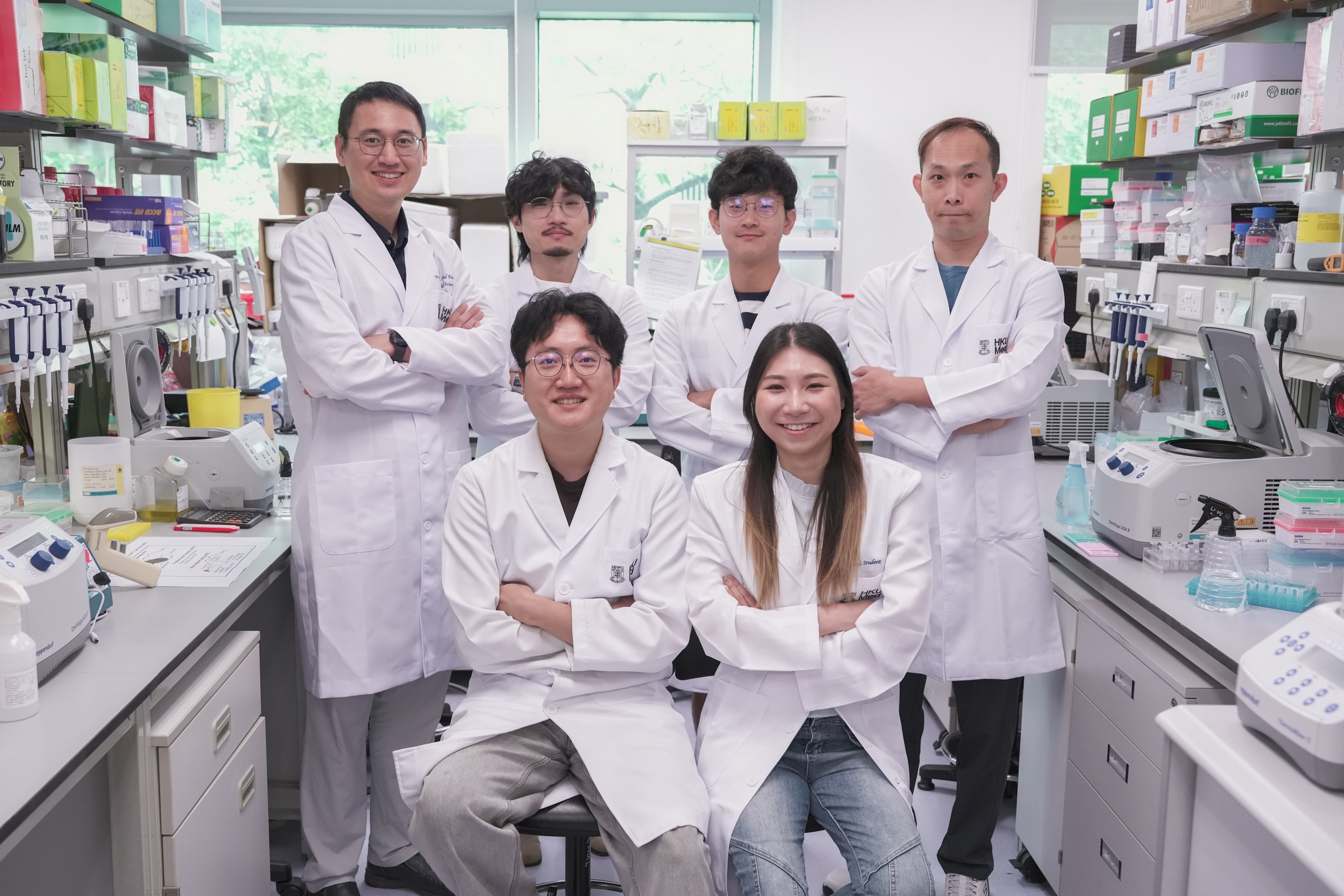
The research was led by Professor Kwon Sung Chul, Assistant Professor, School of Biomedical Sciences, HKUMed. The first author is Joe Lam KC, PhD candidate from the same School.
Acknowledgments
The research was supported by the Research Grants Council of the Government of the Hong Kong Special Administrative Region of the People's Republic of China.
Media enquiries
Please contact LKS Faculty of Medicine of The University of Hong Kong by email (medmedia@hku.hk).
Follow HKUMed