
29 January 2026
A research team led by the Department of Medicine, under the School of Clinical Medicine, LKS Faculty of Medicine of the University of Hong Kong (HKUMed), has synergised impacts of worldwide clinical trial data through a series of meta-analyses on GLP‑1 receptor agonists, an emerging cardiometabolic drug, offering in-depth insights into its safety profile and novel therapeutic potential in treating cardiovascular diseases. The study found that there was no definite risk of ischaemic optic neuropathy associated with GLP-1 agonist use in patients with diabetes or heart diseases. It also revealed that cardiac patients with obesity may improve the long-term success rate of curative catheter ablation for atrial fibrillation by adopting various weight-control measures, along with appropriate medication. These findings will help frontline clinicians perform more comprehensive risk‑benefit assessments before prescribing medications.
Data from over 80,000 patients show no significant optic nerve risk from GLP 1 therapy
GLP-1 receptor agonists are an emerging class of therapeutics for treating obesity, diabetes and cardiometabolic diseases. As their clinical use continues to expand, concerns about their potential side effects have emerged. Previous research indicated a possible link between GLP-1 receptor agonists and ischaemic optic neuropathy, a serious ocular complication that can cause sudden, painless vision loss and visual field defects, particularly among individuals with diabetes and hypertension. However, evidence regarding this risk has remained inconsistent and at times conflicting.
In view of this, HKUMed conducted a meta-analysis to evaluate the safety profile and therapeutic potential of GLP-1 receptor agonists. The team analysed global clinical trial data comprising more than 80,000 patients with diabetes and heart disease, representing the largest sample size examined in this field to date. The findings showed no significant association between the use of GLP-1 receptor agonists and the risk of adverse vision-threatening complications, providing clearer evidence for formulating clinical treatment plans and enabling doctors to comprehensively assess the benefits and risks of these medications.
Integrated weight management and medication improve surgical success
Obesity increases the risk of developing cardiovascular diseases, such as atrial fibrillation (AF), which is the most common cardiac arrhythmia encountered in clinical practice and can result in life-threatening complications, including stroke and heart failure. In another study, the team analysed data from 5,415 patients with atrial fibrillation and found that for individuals with obesity, every 1% reduction in weight was associated with a 6.3% reduction in the relative risk in AF recurrence after catheter ablation. This highlights that sustained weight control is a critical factor in operative success.
Cardiac patients with obesity may improve the long-term success rate of catheter ablation for atrial fibrillation though a holistic approach to weight control, including adopting a healthier lifestyle and incorporating other clinical interventions, together with GLP-1 receptor agonists. Optimal treatment outcomes require patients to adopt a comprehensive cardiovascular risk management strategy, rather than relying solely on medication.
The findings were published in the latest issue of Diabetes Care, which is the journal of the American Diabetes Association, and were presented at the European Heart Rhythm Association Congress in Vienna in 2025.
Data‑driven insights help doctors evaluate new drugs
Lead investigator Dr Will Chan Yap-hang, Clinical Assistant Professor, Department of Medicine, School of Clinical Medicine, HKUMed, said, ‘Our meta analysis of clinical trial data provides important evidence regarding both the safety profile and novel use of GLP-1 receptor agonists in cardiovascular patients. This will help doctors more comprehensively evaluate the potential risks and benefits of prescribing these medications. However, this research does not completely rule out the possibility of rare adverse complications. Clinicians must exercise careful judgement based on each patient's condition. It is essential not to overemphasise the potential benefits while overlooking the associated risks, and to always assess the situation holistically.’
About the research team
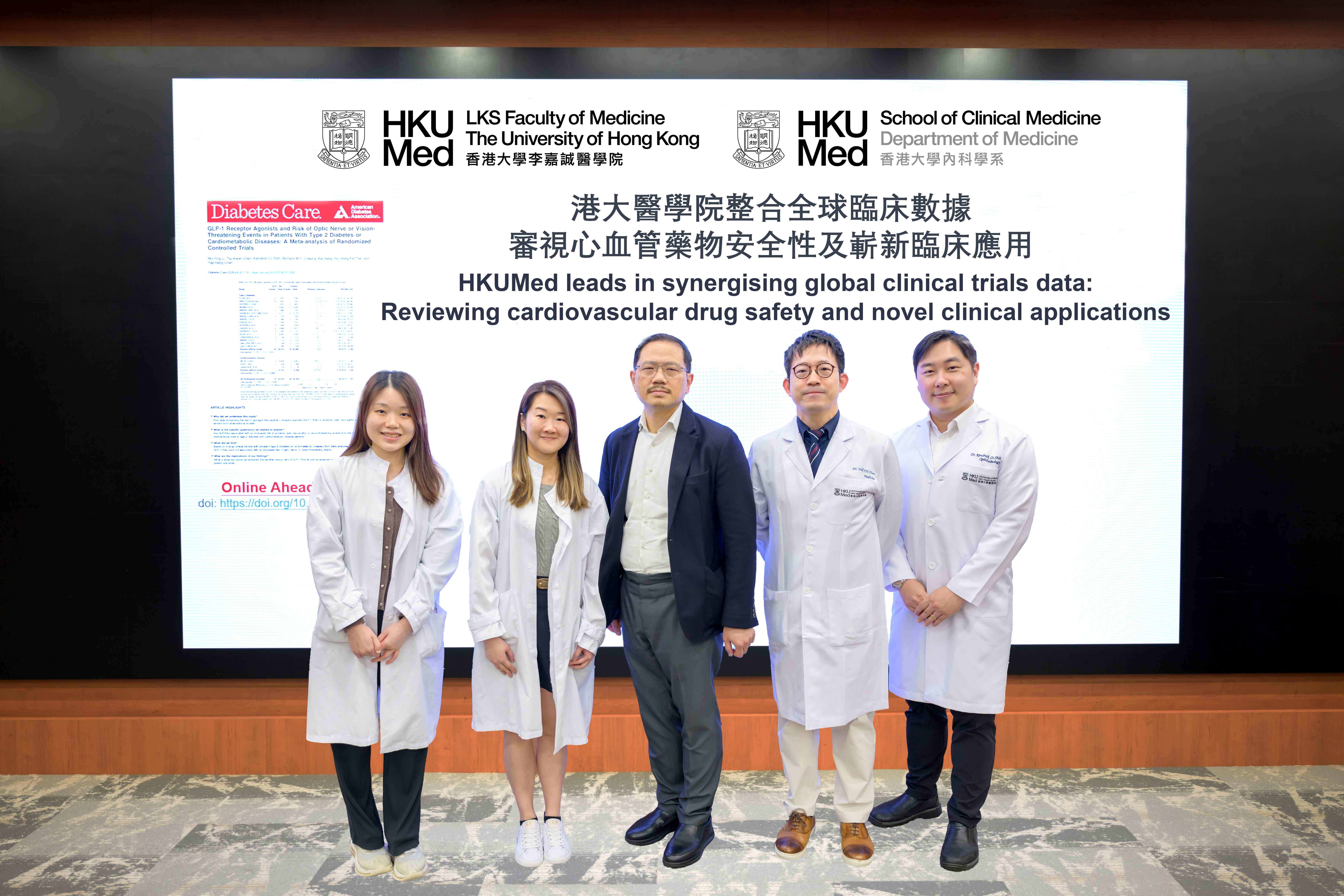
This interdisciplinary study was co-led by Dr Will Chan Yap-hang, Clinical Assistant Professor, and Professor Tse Hung-fat, Chair Professor and Department Chairperson, both from the Department of Medicine, School of Clinical Medicine, HKUMed. The first author is Ms Kathleen Li Hoi-ying. Other team members include Professor Yiu Kai-hang, Clinical Professor, Department of Medicine, and Dr Kendrick Co Shih, Clinical Associate Professor of Practice, Department of Ophthalmology, both from the School of Clinical Medicine, HKUMed.
Media enquiries
Please contact LKS Faculty of Medicine of The University of Hong Kong by email (medmedia@hku.hk).

Follow HKUMed