
08-13 August 2025
Event Date(s)/Period(s)
8–13 Aug 2025
Organised by:
School of Biomedical Sciences
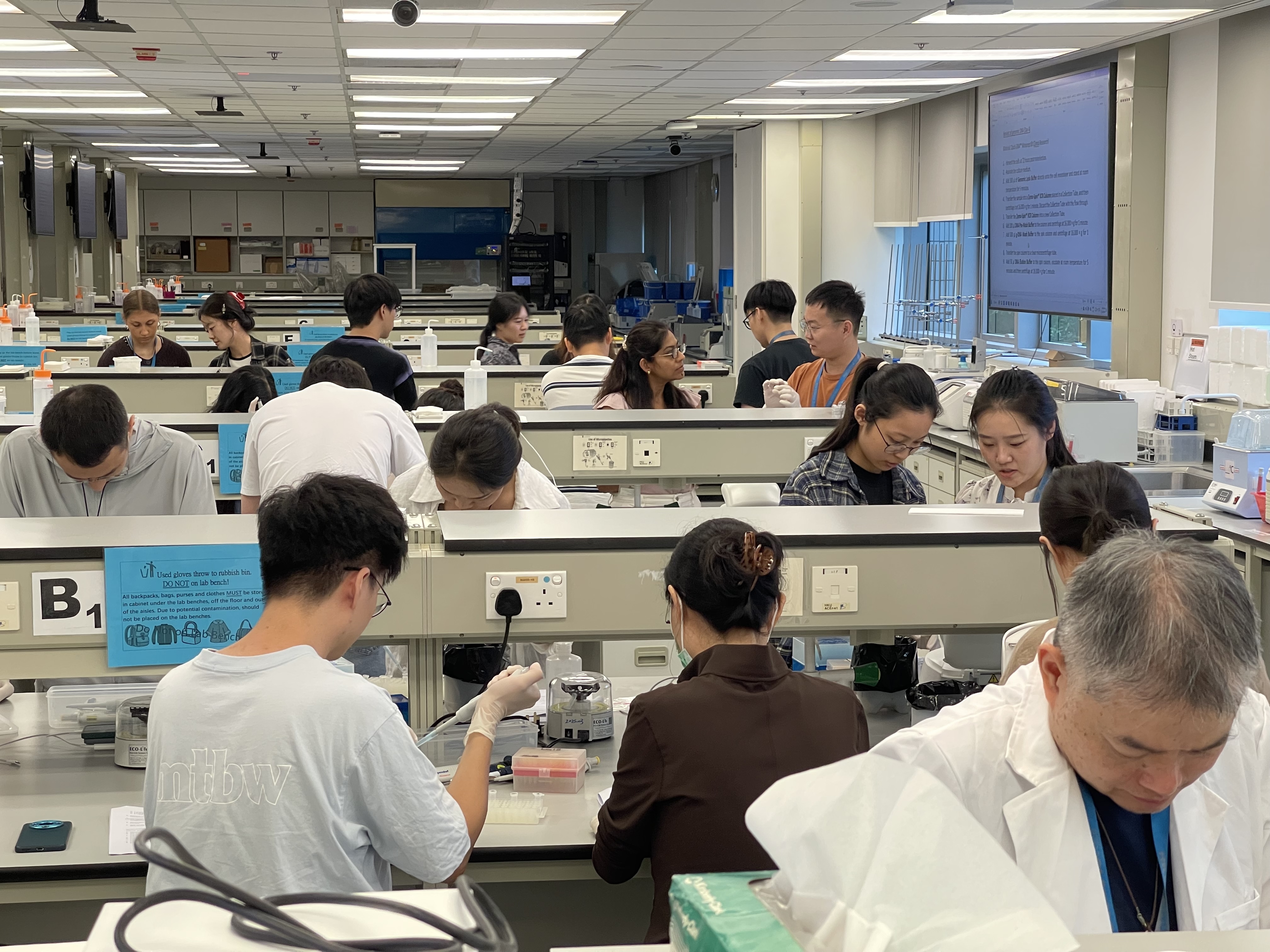
Precision genome engineering by CRISPR is game-changing. The Nobel Prize in Chemistry 2020 was awarded to Professor Emmanuelle Charpentier, from the Max Planck Unit for the Science of Pathogens, and Professor Jennifer Doudna, from UC Berkeley, for their development of a method for genome editing. The use of CRISPR to precisely knockout or knockin genes has increased explosively in biomedical research and as novel therapeutics. CRISPR-mediated knockout of target genes has become the standard for loss-of-function studies in mammalian cells and animals. CRISPR-based forward genetic screens and other applications of CRISPR, including those in live cell imaging, disease modelling and treatment, have resulted in revolutionary ideas and enabling tools in various fields across biology and medicine. The CRISPR revolution is affecting both labs and clinics. Approval for the first CRISPR gene therapy is pending. However, there is a big gap between the rapid development of CRISPR and its potential applications in the local and the wider region, where it is still greatly underused. The goal of this course was to fill this gap by educating young scientists with cutting-edge technologies, providing a forum and platform for discussion and knowledge exchange, promoting the wider use of CRISPR, and strengthening its links to the world. This course introduced state-of-the-art developments and provided hands-on training in a CRISPR experiment. The course multidisciplinary approach covered genetics, cancer biology, stem cell biology, virology and animal models. The aim is to develop this course into a flagship course on CRISPR in Asia.
Follow HKUMed